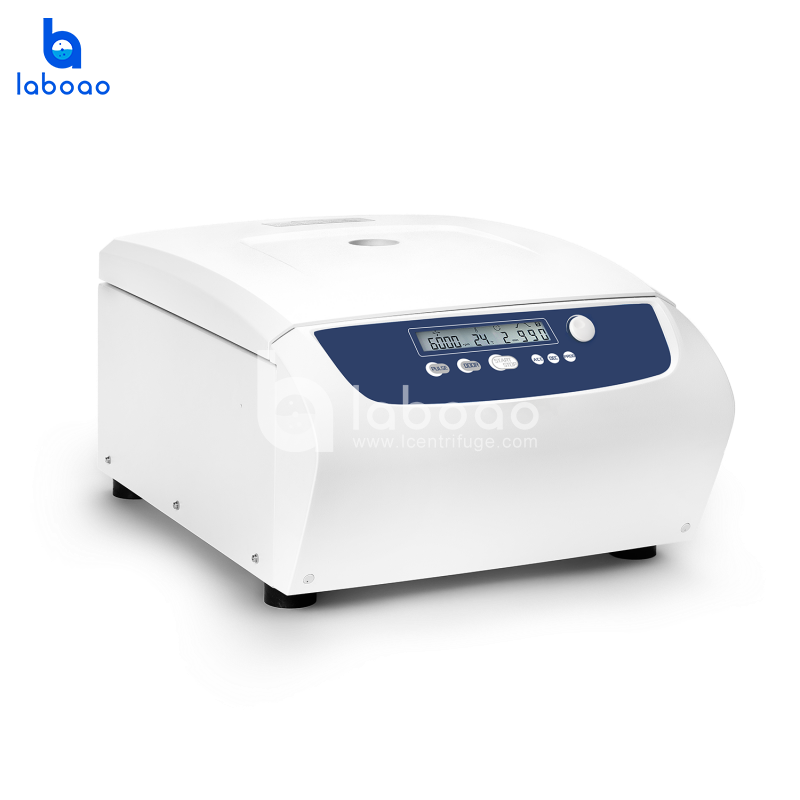
In scientific research and medical experimentation, the centrifuge serves as a vital piece of laboratory equipment used to separate and purify various components within samples. As a common type of centrifuge, the low-speed benchtop centrifuge is characterized by its simple structure, ease of use, and suitability for processing small samples, thereby acting as an indispensable assistant in the laboratory setting.
A low-speed centrifuge is a device designed for the centrifugation of small-volume samples in a laboratory environment. It typically consists of a rotating assembly and a stationary housing. Samples are placed within centrifuge tubes housed in the rotating assembly; through the application of centrifugal force, the various components within the sample are separated. This instrument operates at relatively low rotational speeds—typically ranging from 1,000 to 5,000 revolutions per minute (rpm)—making it suitable for gentle centrifugation of samples.
The operating principle of this instrument is based on the action of centrifugal force. As the centrifuge rotates, the centrifugal force exerted on the sample drives the separation of particles or molecules from the mixture. The magnitude of this centrifugal force is directly proportional to both the rotational speed and the centrifugation radius. Due to its lower rotational speed, this instrument generates a relatively lower centrifugal force, rendering it ideal for the gentle centrifugal separation of small samples.
This instrument enjoys widespread application across the fields of scientific research and experimentation. Firstly, in the life sciences and medical research, it is frequently utilized to centrifuge samples such as blood, cell suspensions, and protein solutions. Through centrifugation, components of blood—such as erythrocytes (red blood cells), leukocytes (white blood cells), and plasma—can be effectively separated; similarly, cellular debris can be isolated from cell nuclei to yield purified samples. Secondly, in the realms of chemistry and material analysis, this instrument can be employed to centrifuge and separate various substances within mixed solutions—including lipids, polypeptides, and DNA—thereby yielding purified target substances for subsequent analysis and detection.
The importance of this instrument cannot be overstated. Foremost among its advantages are its simple structural design and user-friendly operation, which make it an ideal tool for the centrifugation of small-volume samples within the laboratory environment. Whether in the fields of life sciences, chemistry, or materials analysis, this instrument delivers rapid and accurate centrifugal separation results. Furthermore, its compact footprint and low noise levels make it ideally suited for both routine laboratory operations and research activities. With its relatively affordable price point—making it easy to acquire and maintain—this instrument stands as an indispensable piece of equipment in any laboratory setting.
As a reliable workhorse in the laboratory, the low-speed centrifuge is characterized by its simple structure, ease of use, and suitability for processing small-volume samples. It plays a pivotal role in scientific research and experimental endeavors, providing researchers with accurate and efficient centrifugal separation capabilities. Looking ahead, driven by continuous technological advancements and the evolution of experimental techniques, this instrument is poised to undergo further innovation and expansion in its applications, thereby offering even greater convenience and support to our scientific research efforts.